
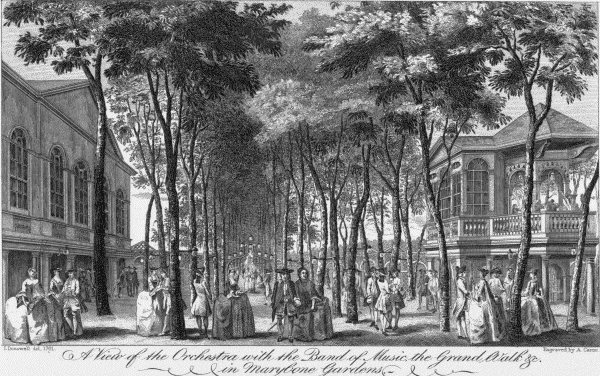
In the spring of 1764, London’s pleasure gardens were providing a thriving population with a variety of music and entertainment. The castrato Giusto Fernando Tenducci and opera singer Clementina Cremonini were appearing at Ranelagh, whilst at Marylebone (Marybone) Gardens:
‘Two young ladies, that never yet appeared in Publick, who, though of a good family and genteel education, are obliged through misfortunes, to endeavour at entertaining the Town. Among many other improvements, a temple, elegantly decorated with paintings, is finishing, facing the orchestra; on the ceiling are two paintings of their Majesties, as large as life, copied from those in Guildhall; and two elegant casts of Handel and Shakespear. The front consists of three pilasters, supporting a pediment, painted in imitation of bas relief; and the grand walk is terminated with an elegant obelisk’.
‘This place of resort is named by the gay-hearted Pepys. He records that the Lord Mayor and Aldermen dined there on July 31st, 1667. On May 7th, 1668, he enters in his diary:—”Then we abroad to Marrowbone, and there walked in the garden ; the first time I ever was there, and a pretty place it is.” These gardens were formed almost immediately after the Restoration by throwing together a place of public resort called ‘The Rose,’ and an adjoining bowling-green; they were on the east side of Marylebone Lane, and the site is partly covered by Manchester Square. In the days of Pope this bowling-green was a place of most fashionable resort. During the last phase of their existence, the Mary-bone Gardens were turned into a regular place of musical and scenic entertainment’. Joseph Strutt, The Sports and Pastimes of England
Some visitors were not so impressed with Marylebone, Sylas Nevlle wrote ‘At 6 went to Marybone Gardens, a place of the kind of Ranelagh – but not so elegant nor frequented by such good company – indeed much indifferent company resort to both’.


