
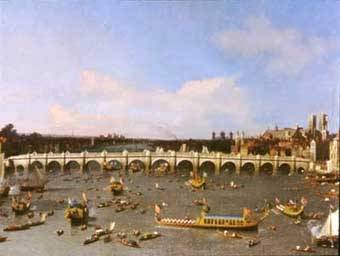
In 1739, the Master of the Turners’ Company, Thomas Stanesby junior sent a request to Abraham Adcock to provide music for the next Lord Mayor’s Show. The request was noted in the Company Court Minute Book:
‘1st August 1739: ordered that Mr Adcock do provide the music for Lord Mayor’s day next. He agreeing to play on the trumpet himself and to provide two good Hautboyes and two good Bassoons…. and that he be paid five guineas for the same’.
Adcock was not the first professional musician to contribute to the Lord Mayor’s festivities; the trumpet player John Grano had participated a few years earlier and Benjamin Baker, a kettledrum player had taken part in the Royal Entertainments in 1714 and 1727. Also in 1727, ‘Mr Anthony’, professor of the French Horn, had played at the amusements and can probably be identified as John Anthony, aka “the Tawny Moor”.
Since the adoption of the new calendar in 1752, the Lord Mayor’s Show has traditionally taken place during the first week in November, but in 1739 the parade was on the 29 October and was described by the London Gazette:
‘Yesterday Sir John Salter, Knt. Lord Mayor Elect for the Year ensuing, was sworn at Guildhall; when the chair and other Ensigns of Mayoralty were surrendred to him in the accustomed Manner.
This Day the new Lord Mayor, accompanied by the late Lord Mayor, Aldermen, Deputy-Recorder, and Sheriffs, in their Scarlet Gowns, went in their Coaches to the Waterside, the Sword and Mace being carried before them, and the City Officers attending, and from thence proceeded in the City Barge, attended by the several Companies in their respective Barges adorned with Streamers and Pendants to Westminster; and having walked round the Hall and solemnly saluted all the Courts, they went to the Exchequer Bar, and the Lord Mayor, did there take the Oaths appointed, and having recorded Warrants of Attorney in the proper Courts, they returned by Water to Black-friers, and from thence in Coaches with the usual Solemnity to Guildhall, where a magnificent Entertainment was provided at which were present, the Great Officers of State, divers of the Nobility, Lords of his Majesty’s most Honourable Privy Council, the Judges, and other Persons of Quality and Distinction’.
London Gazette Saturday October 27 to Tuesday October 30 1739
The festivities, colour and pageantry were observed by the Earl of Chesterfield’s seven year old son, Philip Stanhope. The Earl, keen to oversee the boy’s education, responded to Philip’s description of the procession, urging him to learn from the experience:
‘Dear Boy,
I AM glad to hear that you went to see the Lord Mayor’s Show, for I suppose it amused you, and besides, I would have you see every thing. It is a good way of getting knowledge, especially if you inquire carefully (as I hope you always do) after the meaning, and the particulars of every thing you see. You know then, to be sure, that the Lord Mayor is the head of the city of London, and that there is a new Lord Mayor chosen every year; that the city is governed by the Lord Mayor, the Court of Aldermen; and the Common Council. There are six-and twenty Aldermen, who are the most considerable tradesmen of the city. The Common Council is very numerous, and consists likewise of tradesmen; who all belong to the several companies, that you saw march in the procession, with their colours and streamers. The Lord Mayor is chosen every year out of the Court of Aldermen. There are but two Lord Mayors in England; one for the city of London, and the other for the city of York. The Mayors of other towns are only called Mayors, not Lord Mayors. People who have seen little, are apt to stare sillily, and wonder at every new thing they see; but a man who has been bred in the world, looks at every thing with coolness and sedateness, and makes proper observations upon what he sees’.
Bath, November the 5th, 1739. Earl of Chesterfield to his son
By December of 1739, Londoner’s had cause for more celebration: the Thames had frozen over for only the second time that century. The frost and intense cold lasted until early February and had been so severe, that it has been called The Great Frost ever since. Of course not everyone was happy, watermen were deprived of their normal trade, but there were opportunities for all types of recreation. The amusements included fairground rides and swings, sporting events such as football, ice-skating and hockey, food and souvenir stalls, but most notably, entertainments and concerts provided by the city’s musicians and singers.
There are no references to Adcock, Grano, Baker or Anthony performing at the Great Frost fairs, but they could not have been far removed from the activities. Professional musicians were increasingly required to provide Londoner’s with distractions and furnish regular entertainments for the Livery Companies.
John Grano was invited to perform for the City tradesmen, ‘We were to perform in Favour of the Grocers’ Company. We got there about 2 a Clock in the after noon, assoon as wch. I call’d for Dinner, where it seems that it’s a Custom a Leg of Mutton, Cabbage, Turnips, French Beans, Carrots and a Brace of Rabbits is got for the Musick, who ever perform’.
In 1727, the City engaged a number of musician’s to celebrate not only the Lord Mayor’s election, but also to honour the birthday of George II:
“The King Queen and Royal Family having received an humble Invitation from the City to dine at Guildhall, their Majesties, the Princess Royal, and her Royal Highness the Princess Carolina, came into Cheapside about Three in the afternoon, attended by the great Officers of the Court, and a numerous Train of the Nobility and Gentry, in their Coaches, the Streets being lined from Temple-Bar by the Militia of London, and the Balconies adorn’d with Tapistry. Their Majesties and the Princesses saw the Procession from a Balcony near Bow-Church… Then their Majesties and the Princesses being conducted by the Sheriffs to Guildhall… from the Council Chamber their Majesties and the Princesses went to the Hustings (the Sword being carried before His Majesty by the Lord Mayor) where their Majesties and the Princesses dined, and the Ladies of the Bed-Chamber had the Honour to dine at the same Table with them. Tables were likewise provided for the Nobility, foreign Ministers, Privy Counsellours, the Judges, Ladies, and other Persons of Distinction. The whole Entertainment was very magnificent… After Dinner their Majesties had the Goodness and Condescension to return to the Council-Chamber, with the Princesses, and to be present at a Ball in the Long Gallery and Rooms adjacent till Eleven a-Clock at Night… Their Majesties and the Princesses returned to St. James’s with the same State they came. The Streets were again lined by the Trained Bands, the Houses all the Way were illuminated, and the People made loud Acclamations of Joy”.
London Gazette 30th October 1727


