In 1768 Abraham Adcock participated in the inaugural Birmingham Music Festival, an event that was founded by the manufacturer Matthew Boulton for the benefit of the Birmingham General Hospital.
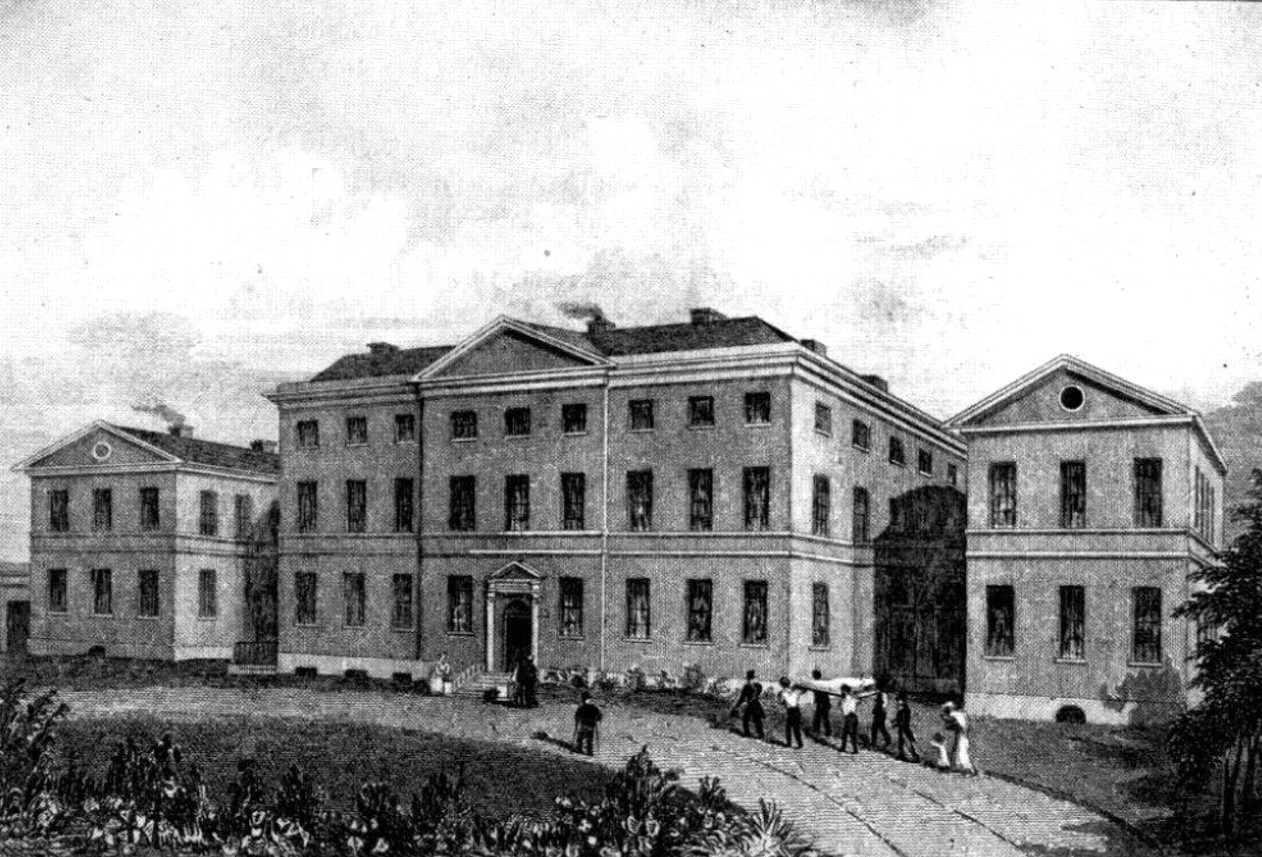
The construction of the hospital had begun in 1766 ‘upon a situation very unsuitable for its elegant front, in a narrow dirty lane, with an aspect directing up the hill, which should ever be avoided,’ but no sooner had the building been erected it was vandalised. On July 11, 1768, the Hospital Board issued a notice, ‘that great Damage having been done to the Building of the General Hospital from loose disorderly People breaking the Windows, &c. Any Persons who shall hereafter be detected in such Scandalous Proceedings, will be prosecuted with the utmost Severity.’
Then, later that month the Board issued another notice:
“And for the Benefit of this Public Charity, on Wednesday, Thursday, and Friday, the 7th, 8th, and 9th of September, the Oratorios of Il Penserosa, &c. Alexander’s Feast, and the Messiah will be performed here… the best Vocal and Instrumental Performers will be engaged on this Occasion, the further Particulars of which will be inserted in a future Advertisement.”
Indeed just two days before the start of the festival, an advertisement was placed in the local gazette informing the public of the star-studded extravaganza and the appearance of some very notable performers:
“The Principal Vocal Parts will be performed by Mrs Pinto, Mr Norris, Mr Matthews, Mr Price, &c., Instrumental by Messrs, Pinto, Miller, Adcock, Jenkins, Park, Lates, Hobbs, Clark, Chew, &c. &c.”
Adcock was surrounded by familiar faces and many of these performers had previously joined him at the Three Choirs Festival; the likes of Norris, Pinto, Miller, Jenkins, Park, Matthews and Lates had all been working with Adcock from as early as 1754 if not before.
It was also around the year of 1754 that Adcock had met Capel Bond and had performed some of the composer’s music at Vauxhall Gardens. Bond took charge of conducting the oratorios at the new festival and had requested that the performers attend the rehearsal on Tuesday 6th September at 9 o’clock in the morning. This of course was the off season for the London theatres where many of these performers had permanent employments, as a consequence they would have been available to make the journey to Birmingham for what might have been a fairly small remuneration.
Whilst it is not clear they were actually paid for their appearance at this charitable event, Adcock, Miller et al. were paid for their performances at the Foundling Hospital concerts in the 1750s and so paying performers for their contributions was not unprecedented.
As the musicians began to assemble in Birmingham, notices were sent out to the public informing them of the availability of tickets at 5s piece, ‘each to be had at the Swan, Castle, Hen and Chickens, Dolphin, and Red Lion Inns, Cooke’s Coffee-House, and Duddeston Hall’ and inviting all those who were interested to attend the Church on Thursday morning for the opening of The Music with a Trumpet Concerto by Mr. Bond. Patrons were also apprised of the set down arrangements:
“Ladies and Gentlemen are desired to order their Servants to drive their Carriages down Peck-Lane and up King-Street, as they go to and from the Playhouse; the Streets will be lighted from the Playhouse to the Ball Room.”
The Gazette does not indicate who played the trumpet concerto, but from other sources it has been gleaned that Adcock reprised his performance of the said concerto from Vauxhall Gardens some fourteen years before.
Even though Adcock’s solo performance is not recounted, the festival was described by the papers on 12th September 1768:
“On Wednesday Evening for the Benefit of the General Hospital were performed the Musical Entertainment of L’Allegro and Il Penserosa to a brilliant and Crowded Audience at the Theatre in King Street.
“On Thursday Morning Mr. Handel’s Te Deum, and Jubilate, together with the Coronation Anthem, and Dr Boyce’s Anthem, suitable to the Occasion, were performed at St Philip’s Church, after which a Collection was made, which the Countesses of Dartmouth and Aylesford very obligingly stood to receive at the Church Door for the Benefit of the Charity. And in the Evening Alexander’s Feast. And on Friday Morning was Performed at St. Philip’s Church the Sacred Oratorio of the Messiah, which met with the most distinguished Applause. The Concourse of Nobility and Gentry from this and the neighbouring Counties gave the whole a most Splendid Appearance, and at the same time shewed their Desire to concur with the Inhabitants of this Place in support of a Charity so beneficial and extensive.
“The Collection at St Philip’s Church with the Money received for the several Performances and Benefactions given on this Occasion amounted to near Eight Hundred Pounds.”
Adcock returned to the Birmingham Music Festival the following year, but he began to travel to the regional festivals less and less, instead he spent his remaining few years concentrating on organ building and cultivating his friendship with Sir Samuel Hellier.
MJ Holman @mishjholman